

MTG Misprints Guide
Magic: The Gathering misprints are among the most fascinating and highly collectible cards in the hobby. From common printing defects to extremely rare production errors, every misprint is unique.
While it is impossible to document every known error, the following guides cover the most important types of MTG misprints, explain how they occur, and showcase some of the rarest and most interesting examples ever printed


Major MTG Misprint Categories
Off-Center
An off-center card is printed with the image noticeably shifted away from the center of the card. Technically, these cards are not considered miscuts, as no part of a neighboring card or the print sheet is visible.
Despite this distinction, off-center cards have become an established category within the MTG misprint community due to their popularity among collectors.

Crimped Cards
Crimped cards are created when a card becomes caught in the sealing mechanism during the packaging of a booster pack. The resulting crimp pattern matches the seal of the booster wrapper.
Most crimps appear along the top or bottom edge of a card, although full or centered crimps can occasionally occur. Genuine factory crimps are popular among collectors because they clearly originate during the packaging process.

Ink Errors (Additional Ink & Missing Ink)
Ink errors occur during the printing process when one or more ink layers are applied incorrectly. They range from additional ink and smudged colors to missing color layers or completely absent ink channels.
Ink errors are generally divided into Additional Ink and Missing Ink variants. As a rule, the more visible an ink error is to the naked eye, the more desirable it tends to be among collectors.

Artwork & Editorial Errors
Not every unusual Magic card is the result of a production error. Some errors originate during the design, editing, or proofreading process before a card is printed.
These include incorrect mana symbols, rules text mistakes, spelling errors, artwork issues, or other editorial inaccuracies. A well-known example is the German version of Rath's Edge, whose printed rules text incorrectly lists two colorless mana instead of one colorless and one red mana in its activation cost.
Many of these mistakes are later corrected through errata or in subsequent print runs. Although they are not manufacturing defects, they have become a distinct and highly collectible category within the Magic community.

Square Corners
Square Corners occur when a card partially or completely misses the corner-rounding machine during the manufacturing process. Instead of the standard rounded corners, the card retains one or more sharp, square corners.
Multiple square corners almost always appear on the same side of the card, making them easy to distinguish from post-production damage or trimming. Genuine factory-produced Square Corners are rare manufacturing errors and are highly collectible among misprint enthusiasts.

Miscut
Miscuts occur when a card is cut incorrectly during the manufacturing process. Genuine factory miscuts often reveal parts of a neighboring card, the print sheet, or even filler cards.
Factory miscuts are among the most desirable MTG misprints and should not be confused with Non-Factory Cuts (NFCs), which are created after production and are generally not considered authentic misprints.

Filler Cards
Filler cards are placeholder cards used during the printing process and are not considered traditional misprints. They occupy empty positions on an 11 × 11 print sheet when there are not enough cards to fill every slot.
Although filler cards are intended to be discarded during production, a small number occasionally escape into circulation. Due to their rarity and unusual origin, they have become highly sought-after collectibles within the MTG misprint community.
Test Prints
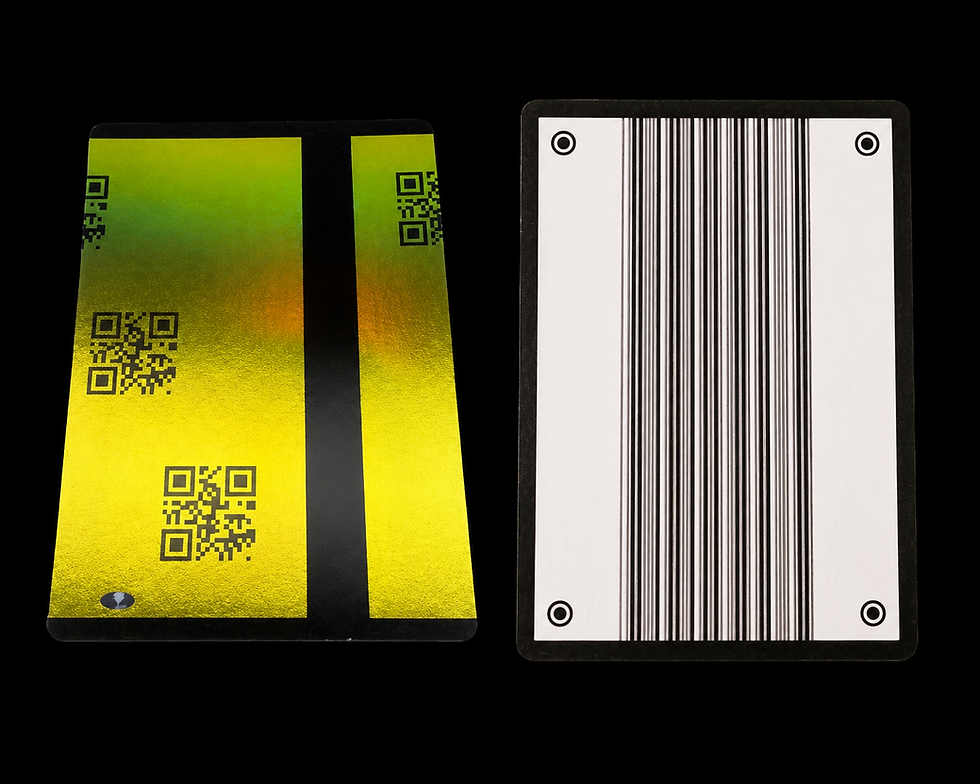
Test prints are produced during the development and testing of new printing processes, materials, foiling techniques, or card layouts. They were never intended for public release and often differ significantly from the final printed cards.
Due to their extremely limited numbers and their importance in the production history of Magic: The Gathering, test prints are considered some of the rarest and most prestigious collectibles in the hobby.

Flipped Card Backs
Flipped Card Backs are created when a print sheet is fed into the printing press upside down or in the wrong orientation during production.
As a result, the back of the card is rotated by 180° relative to the front and may also appear off-center. Unlike a miscut, this error originates during the printing process itself rather than during the cutting stage.
Because genuine factory-produced flipped backs are extremely uncommon, they are highly sought after by collectors.

Wrong Backs
Wrong Backs are Magic cards that were accidentally printed with the back of a different trading card game or another product. This rare factory error occurs when incorrect print sheets are used during the reverse-side printing process.
Because they represent genuine production mistakes and only a very small number have ever surfaced, Wrong Backs are among the rarest and most valuable Magic misprints.

Oldborder Foil Misprints
Explore our Old Border Foil Guide, featuring a comprehensive chapter on the unique misprints found on early Old Border Foils. Learn about the most desirable production errors and what makes them so collectible.